Showing posts with label Painting. Show all posts

Wednesday, December 17, 2014

A Festival of Fried, Part III: One Foot in the Grave


Michael Fried gives us a vision of personified animals in his poem “Care,” which he dedicates to Allen Grossman, one of the leading interpreters of his poetic work. As in poems such as “The Hilltop” with its Aesop-like speaking fox, eagle and rabbit (NBR 58), “Care” imagines a badger who has amassed a collection of art but is concerned that it will be squandered or destroyed, implicitly after his death. While the image of the nervous keeper of a horde of treasure is interesting enough, the badger’s subterranean habit and its way of digging in the earth particularly caught my attention. For, the motif of digging is one that occurs frequently across Fried’s oeuvre. His poem “Cézanne” finds the narrator collapsing after “a day spent looking at paintings / I’m as exhausted / as I would be if I had dug a trench.” (NBR 12) If this equation of looking and trench-digging sounds a bit rich from someone who has probably never dug a trench in his life, Fried also then turns the equation around to imagine a reciprocal exhaustion on the part of the painter. The labor of making the painting figures as “a day spent digging trenches.” (NBR 12)

Understanding acts of looking at and making pictures qua digging also finds instructive resonance in Fried’s art historical writing. In “Painter into Painting” from 1982, Fried takes the bent bodies of Gustave Courbet’s Stonebreakers (at left), who painfully smash and heft bits of earth, as allegories of the hands of the artist painting the figures: “The old stonebreaker and his young counterpart may be seen as representing the painter-beholder’s right and left hands respectively: the one wielding a shafted implement that bears a distant analogy to a paintbrush or palette knife, the other supporting a roundish object that might be likened to the (admittedly much lighter) burden of a palette.” (PP, 641-2) Just as the poet’s labor of looking at paintings is equivalent to the trench-digging work of the artist who makes them, so both actions register in Courbet’s simultaneous identity as painter and first beholder of his own work (PP, 634). These actions then get transcribed—or better, personified—as markers of Courbet’s own identity (see PP, 642-3) as he fulfills what Fried sees as his ambition to “transpose himself as if corporeally into the painting on which he was working” (PP, 634) as a way to overcome the theatricality felt in his position in front of the canvas.

There is another way in which digging and “earth-work” figures significantly in Fried’s reading of Courbet, however. In an article from 1983, Fried approaches Burial at Ornans through Courbet’s landscapes of the late 1840s, teasing out the role of central, serpentine forms often occupied by images of rivers. These river motifs serve to guide the eye into and through the landscape, but their resulting hollows and declivities follow from a Kunstwollen directed at carving out a deeper kind of ground-work: “a desire for excavation and filling in, a desire that ... receives its most direct and in a sense its most capacious expression precisely in the Burial.” (SB, 654) What is driving this desire, Fried will argue, is Courbet’s aim to undermine his own separation from the painted worlds he is creating with the effect that “the bottom of the picture is subjected to extraordinary pressure in Courbet’s art.” (SB, 663) So, whereas the chiasmic labors of Cézanne and his viewer make for parallel but discrete trenches, Courbet’s split identity and simultaneous occupation with seeing and painting makes earthwork central to his project. Of the foregrounded grave in the Burial, Fried writes: “We might say that both the location and the treatment of the grave bear witness to a resolve to cut the ground out from under the feet of the beholder and by so doing to leave him nowhere to stand outside the Burial itself. Part of the tool by which that labor presumably was accomplished can be made out just to the left of the grave: the blade of a shovel, crusted with dirt and, like the grave, abbreviated by the bottom framing edge. This is suggestive ... much as if the fictive activity of excavating the grave (of excavating this grave precisely here) and the actual activity of painting the Burial were in crucial respects analogous.” (SB, 666)

All of these effects, we need to remember, follow from the central thrust of Courbet’s project: “the painter-beholder’s ‘fantasmatic’ insertion of himself into the painting” or, again, “the heavy urgency of the painter-beholder’s determination to achieve union with the painting before him.” (SB, 676) Given the ancient gendering of the cold, wet earth as feminine, Fried can hardly escape from the sexual address of this urgent drive for insertion through the bottom or “from the rear” (PP, 638); indeed, in his Courbet book, Fried will take on these questions directly. But, reading his poetry, what struck me particularly was Fried’s return to these metaphors of excavation and passage into the earth, as it were, in reverse. In a poem called “The Tunnel,” the narrator describes his father made fluid—dying “of a cirrhotic liver / caused by poisoned blood / flushed through him one winter dawn / to fight a bleeding ulcer” (NBR, 7)—penetrating a stony portal: “He found a stone wall / with, at its base, a tunnel / just too narrow to admit / a man. Undaunted he crawled though / hand over hand/ to the other side.” (NBR, 7) Unlike the hands-made-into-bodies as the artist passes into Stonebreakers and out of theatricality, the broken body of the leaking father passes out of life through a stone portal, a grave.

This brings us back to the worried badger. This badger, Fried tells us, has a poet-friend who collects ancient pots, keeping them in an apartment “like a cave.” (NBR, 13) As with the entombment of the father, these pots are “of hard gray stone.” (NBR, 14) Yet, where the father himself had become fluid, these subterranean, stony vessels remain available for activation by artistic penetration. The badger’s friend is convinced that one of these newly-acquired pots “was a scribe’s inkwell. / When the time comes he will dip his pen in it / to write his gravest / songs.” (NBR, 14) Moving with the venerable alignment between power and penetration noted in the reading from Leo Bersani (IRG, 21), death is turned into life by this act of insertion, the cave-like setting and the material grave recouped into immortal, poetic gravity. “Care”, then, is not only the condition of Dasein to the world, but the kind of comportment one needs for reading and writing around the grave. So we saw in class two weeks ago, one of the most ingenious features of Fried’s writing on Courbet is the plotting of the reader like the mourners in the burial as “walking slowly, almost somnambulistically, in the ultimate direction of the open grave.” (SB, 647) Like Stanley Fish’s account of Paradise Lost where the reader endlessly performs the plot by falling—by failing to identify with the right party, by being tricked into Satanic rhetoric—we who fail to see the poetic jaws enfolding around us (if we miss this reference to the plotting of appreciation for the depiction of acts carried out “automatically, as if unconscious ... [with] almost somnabulistic character” [AMTFP, 144]) will end up occupying the grave, rather than sprung artistic from it.

So much for where we left off last time. Soon after class, I received an email from a colleague who shared this insight: “I had a little epiphany this morning: graphein = to dig, to carve, to write.” An excellent point. The etymology of the graphic—binding writing, drawing and digging—would certainly have been known to Fried as, among others, Svetlana Alpers talks about it at some length in The Art of Describing (1983), which he cites in various places. But, it also raises an interesting question about Fried’s account of Courbet—one of particular relevance to our readings for today. That is, if Courbet is moving around his signature in Stonebreakers from right to left; if he is making his central figures in that painting into isomorphs of his own initials, and—most critically—if he is operating with this conception of painting as digging/excavating, might we not also see him as sharing Eakins’s conflict between writing/drawing vs. painting, between the quasi-Wölfflinian graphic versus pictorial seeing? In other words, where Fried sails imperviously between Courbet’s drawings and paintings but sees those relations as problematic in Eakins, might the graphic not be seen to menace Courbet as well?
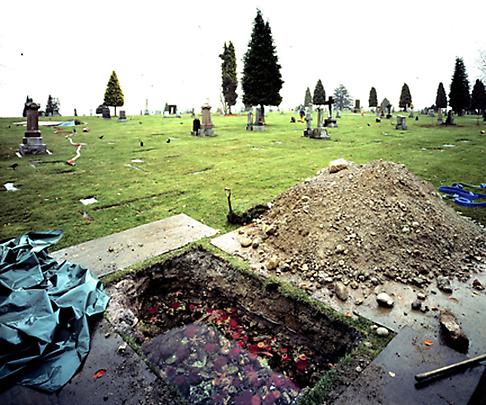
These questions are pertinent for us today as the figure of the excavation and the filling grave occur again in Fried’s writing on photography. Offering an extended account of photographer Jeff Wall’s laborious working process (based on their own, private email correspondence) as split between on-site shoots and digital reconstruction, Fried parenthetically observes that “as yet Wall has found no means of acknowledging in his art the prolonged and repetitive labor that goes into the making of a work like Morning Cleaning, though, perhaps the imagery of digging a well, a grave, or an anthropological site, as in The Well, The Flooded Grave [above], and Fieldwork may be viewed in that light.” (JWWE, 524) As presented here, Wall’s attention to sites of digging are privileged as they appear to answer to the modernist moral value of acknowledging the material conditions of their making without being reduced to them. Just as viewing and writing about pictures is like digging the graves that figure in Fried’s texts, shooting and digitally building photographs are like the earthy excavations Wall shows us.

But, might this gravitation toward the grave in Wall’s work not also help us to think about the morbidity of photography in recent discourse. Themes of death feature prominently in Roland Barthes’s Camera Lucida (see BP, 558-561), a work central to Fried, Michaels and many others. Yet, how do metaphors of vulnerability and loss of control figure more broadly in conversations about photography? More to the point, what is at stake in these figures?

Works Cited

NBR: Michael Fried, The Next Bend in the Road. Chicago: University of Chicago Press, 2004

PP: Michael Fried, “Painter into Painting: On Courbet’s After Dinner at Ornans and Stonebreakers,” Critical Inquiry 8, 4 (Summer, 1982): 619-649

SB: Michael Fried, “The Structure of Beholding in Courbet’s Burial at Ornans,” Critical Inquiry 9, 4 (Jun., 1983): 635-683

IRG: Bersani, Leo. "Is the Rectum a Grave?" October. 43 (1987): 197-222.

AMTFP: Michael Fried, “Absorption: a Master Theme in Eighteenth-Century French Painting and Criticism,” Eighteenth-century Studies 9, 2 (1975): 139-177

JWWE: Michael Fried, “Jeff Wall, Wittgenstein and the Everyday,” Critical Inquiry 33, 3 (Spring 2007): 495-526

BP: Michael Fried, “Barthes’s Punctum,” Critical Inquiry 31, 3 (Spring 2005): 539-574

Sunday, January 26, 2014

Obligations

Oh my poor, forlorn blog! How I have let you slide in past months. Nary a word you have hear from me, I observe, since October. For shame, Sanford Sanchez (if that is really your name). However, if obligations have been weighing on me and drawing my attention away from this fine format, I am pleased to report that one of the livelier figures of late eighteenth century life has recently been sharing some of his thoughts with me on our very topic: obligation.

And this protagonist of whom I speak? James Northcote (1746-1831), one-time apprentice to and later biographer of Sir Joshua Reynolds. Our year is 1776 and, like the colonists across the pond, Northcote is sizing up the merits of taking his liberty, in this case from an apprenticeship he had held with Reynolds for over four years. When he confronts Reynolds with the length of this tutelage, so Northcote reports to his brother, “he [Reynolds] smiled and said he thought that full long enough and that I was very well able to do for my self now. I then said that I was very sensible of the great obligations I had to him I would stay any time he should think proper if I could be of service to him, he said by no means I had done enough already.” Despite Northcote’s talk of ongoing “obligations,” Reynolds is cutting the proverbial cord, leaving the younger painter to fend for himself in a highly competitive London art-market.

Now, Northcote’s brother and father in Plymouth think he is crazy. Surely, he would do better by staying with Reynolds, they counsel, where he could at least keep a roof over his head. Northcote rebuffs this idea vigorously. Learning of the opinions of a few family friends who “think it best for me to continue longer with Sir Joshua,” the apprentice merely sneers: “This astonish’d me even tho I consider’d how totally ignorant they are of the study of painting.” He defends his proposed departure, first, by snatching a page from Reynolds’s own high-minded theories of eclectic emulation: “Can any Body think Sir Joshua got his excellence by seeing, imitating and being saturated with the manner of a single master. A student who goes this way to work is ruin’d beyond a doubt and the highest degree possible for him to arrive at is to be an imitator of the manner of a single master without possessing that delightful originality which is the whole merit of that master, for manner is only the defective part of every man.”

However, it quickly becomes clear that more than high principle is in play. If he is to fulfill his dream of traveling to Italy to study the revered Old Masters in situ, then Northcote needs money. That can’t be gotten by remaining with Reynolds who, Northcote complains, never gave him more than one hundred guineas in the total duration of his apprenticeship. Drudge-work under the aforementioned obligation without pay has a period name, and Northcote uses it: “two very long apprenticeships is enough in one lifetime and this I have now done, I no longer want to be a slave.”

Manumission, in the case, comes from the invitation to Portsmouth by a naval officer named Mr. Hunt who promises to introduce Northcote to the officer-class garrisoned at that major naval base, many of whom were keen to have their portraits painted. The departure is a fearful moment for painter. No longer a spring chicken (at the age of thirty), his prospects of success in Portsmouth are not guaranteed but he hopes to make enough money in there such that “I might only have occasion to paint Plymouth those who I am under any obligation to.” Entrusting most of precious materials—paintings, drawing, and other hard-won implements of his artistic education—to ship-captains (even though he refuses to go by ship himself “as I might be made sick and lose time by it or be lost myself”), Northcote ultimately does find success in Portsmouth.

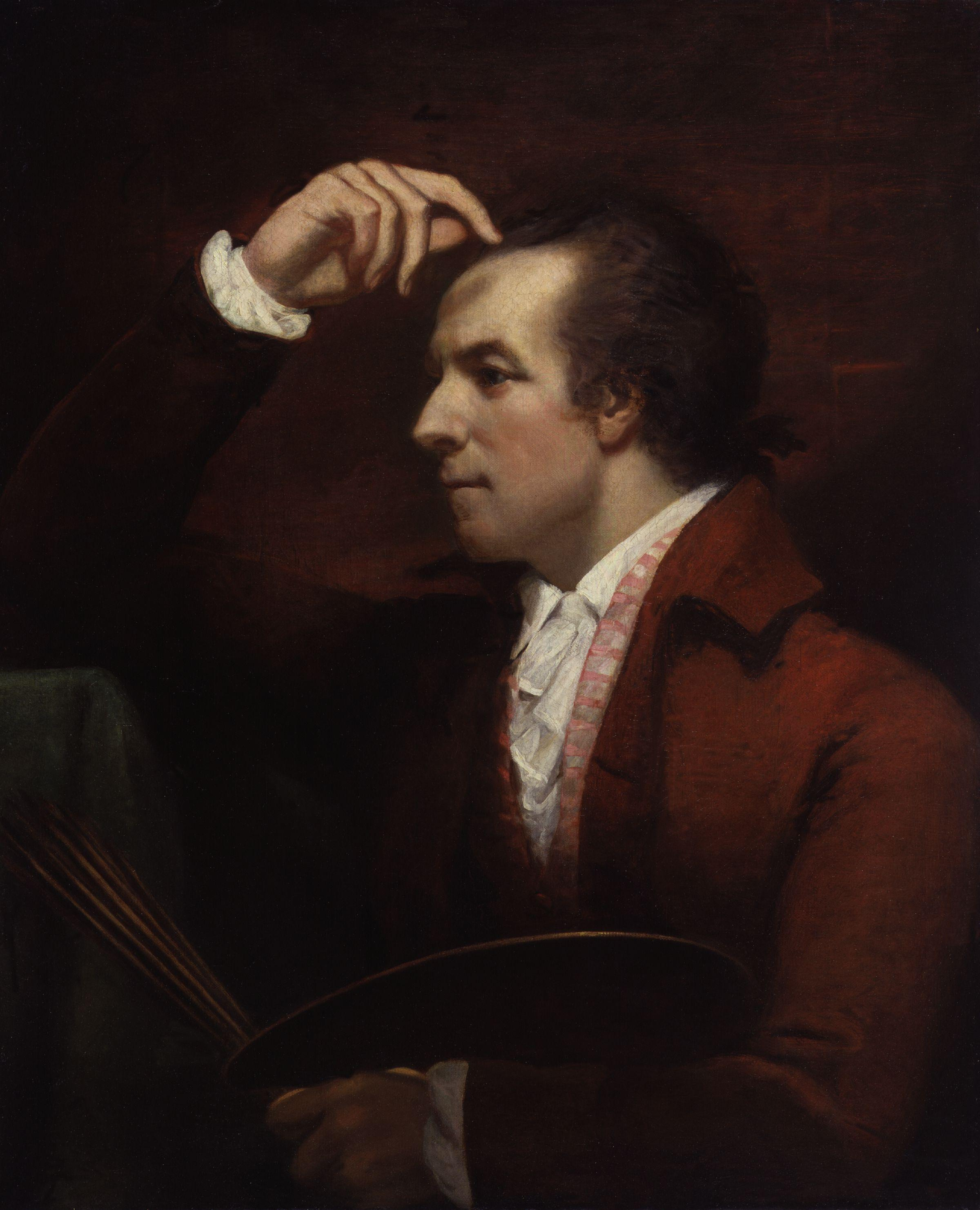
As he is being fêted and amply remunerated by the south-coast gentry, his brother writes. He calls him back to mind his obligations to his own home town. There, his “friends think it will be paying my native town an ill complement to paint at any other place before I come there.” Northcote’s response is again surprising: “I am not under the least obligation to any one mortal there.” Freed from his slave-like obligation to Reynolds and desiring to paint only those to whom he owns obligation, Northcote overcomes those obligations insofar as he is able to enact the liberalizing, many-mastered approach taught by Reynolds’s discourses while making the money that actually does fund his eventual voyage to Italy. Obligation ends by the ability to generate much, which in this case is the means if artistic liberality—freedom from dependence on any one school. Per Northcote's self-portrait above, a right old head-scratcher that one is.

Sunday, January 13, 2013

Working in the Dark

On view at the newly re-opened Yale University Art Gallery is Thomas Eakins's stunning 1872 portrait Kathrin, which I was able to study for a while this afternoon. The photograph above offers a much clearer resolution of the picture as image than can be seen under gallery conditions. Where the shadow cast across the sitter's face merges nearly seamlessly into the chair's plum-colored head rest in the photo, it leaps shrilly forward in the gallery as the spotlights glare off the picture's heavily-worked paint film. Similarly, if the photograph yields a definable footstool in the pictorial foreground, the canvas itself is much more ambiguous, compelling the beholder to sound the floor's floral shallows to find exactly where the vertical support of the stool cedes to the surrounding, spiraling arabesques of carpet.


Drawing from Walter Benjamin, Michael Fried has described what he sees as the tensions between the horizontal plane of drawing and the vertical plane of painting in Eakins's work. Reflecting on my drawing after Eakins, I think that Fried probably has a point. Eakins's image prompts an oscillation effectively re-enacted in the drawing as I dutifully (that is, somnolently) retraced the finicky contours of the imposing armoire as at upper left in the detail and then got lost in the tonal world of the sitter's immediate environment in the center. What struck me most as I drew this picture, though, is Eakins's willingness to work in the dark, as it were. Although this is nominally a portrait, he seems to delight in obscuring the sitter's visage. He runs together her high-lighted nose and cheek, the join of her chin and neck, the boundaries between her right, fan-holding for arm and the project arm of her chair. Eakins renders the "action" of the picture (such as it is) in such subtle tonal variations that it verges upon perversity. As I only realized after about 40 minutes of drawing, the sitter's arched left hand is not only passing over the globe of the chair's arm in a kind of benediction, but she is playing with the kitten in her lap who stares out from the picture plane. Passages like this are such a pleasure to draw not only because they deliver the frisson of disclosing that which had previously resisted pictorial resolution, but they also encourage drawing in a way that aims toward a disintegration of graphic closure. Since you can't see what you're doing as you work in the dark, the act of drawing is freed back to an atavistic scribbling. Boundaries are sacrificed; the isomorphisms of sitter and sittee (arms and arms, head and head-rest, etc) are embraced, while—to my great surprise and delight, at least—these renunciations turn out to deliver back interesting and otherwise-unknown information about the object of study.

An aesthetics of invisiblity; a confusion or merging of figure and ground such as we might find in slightly later works by Vuillard (as at left)—all of those can certainly be found in Eakins's conjunction of carpet and footstool. But, prolonging our appreciation of the twilight—our willingness to wait on that shadowy threshold of understanding—that seems to me to be the gift that Eakins offers us.

Monday, March 26, 2012

"Suspended ... on the depth and nothingness of formless transparency"

In his well-known volume Burning with Desire: The Conception of Photography (MIT, 1999), Geoffrey Batchen conjures up a persistent "mystery." If the raw materials of photography—the formation of an inverted, reversed image inside a camera obscura that could be focused by a lens and the sensitive response of silver salts to sunlight—had been available since the early eighteenth century, why was it that photography's invention had to wait until the banner year of 1839 with the revival claims of Louis Daguerre and William Henry Fox Talbot? Even if the earlier advances by Thomas Wedgwood and Humphry Davy of 1802 or the "points de vue" of Nicephore Niepce of ca. 1816 were to be taken into account, nearly a century would still mysteriously divide the discovery of photographic means and the arrival of the art itself.

It must be said that this supposed air of mystery has been pretty convincingly dissipated under critical examination. Far from relying on century-old techniques, so photo historian Joel Snyder argues, Talbot and Daguerre might better be seen as making their crucial inventions by using chemical preparations that had only been formulated in the mid-1830s. Rather than being surprised that photographic processes were not invented earlier, Snyder quips, "it is something of an astonishment that they were invented as early as they were." However we want to sort out this debate, Batchen's basic claim still merits further consideration. That is, by his account, photography was conceived before it was brought into practice; a desire to fix the images that generations of learned observers had watched in the camera obscura preceded the chemical capacity to materialize those ephemeral effects. And, crucially, that desire materializes only in the years around 1800. "Only at the end of the eighteenth century," Batchen claims, "did speculations of this kind become frequent and widespread." (Burning with Desire, 32)

To explain what drew this desire to photograph into existence, Batchen supplies an array of factors that follow a roughly Foucauldian scheme. Classical knowledge, in this account, saw Nature's profusion as:

... signs of God's mysterious ways, of an order operating beyond the ken of mortal beings. However, at a certain point in history [around 1800] this view of nature, together with the Linnaean tabula rasa, suffered a profound internal crisis. During the period in question, the speculations of European thinkers as diverse as Lamarck and Lyell, Goethe and Erasmus Darwin, Kant and Hegel, Coleridge and Constable, contributed to its complete transformation. From a stable clockwork entity produced by a single act of divine creation, nature came to be seen as an unruly, living, and active organism with a prolonged and continuing history. (Burning with Desire, 59)

So, Batchen claims, in addition to flourishing discourses like the picturesque that confused the natural and the artificial (p. 78) and the shifting nature of the beholder (p. 82-4), the compulsion to fix images inside a camera space emanated from this new dynamism within nature herself. The "dry," mechanical Nature of the Classical age is made, as it were, so "liquid," fluid and fluxing that she needs to be captured by early nineteenth century optico-chemical intervention.

Whether or not Batchen's model (or Foucault's, for that matter) of pre-1800 knowledge would really withstand the dynamism that we have seen in seventeenth century texts also examined in this class, let's allow for a moment that there is something to this thesis on the changing nature of nature. I advocate for that tolerance as that view of nature finds an incredible interesting resonance in an unlikely source: that is, Sir Charles Eastlake's Methods and Materials of Painting of the Great Schools and Masters (1847).

Concluding the second volume of this study, Eastlake offers a scintillating contrast between the Flemish technique of painting in oil with that of the Venetians. Whereas the Flemish painted "alla prima—that  is, though the work might be long in the hand, each part was finished as much as possible, and often literally, at once" (Eastlake, Vol. II: 272), the Venetians went contrived a complex system of underpaint and glazing that remained ever open to revision: "No part was finished at once, and, far from desiring to give a glossy surface while the picture was in progress, the contrary was aimed at at till the whole was completed." (Eastlake, Vol. II: 273) Light colored underpainting would then read as a warm tone when seen through an oil film of darker, transparent glaze, while a darker underlayer would appear cool when swimming beneath a lighter colored glaze. The differences in effect and conception are substantial; whereas Flemish painting was made piece-by-piece with colors mixed on the palette and then applied so that the composition came into view more or less as it would ultimately look, the Venetians required a complex sequence of interactions. Eastlake puts it this way: "In the Venetian practice, degrees both of warm and cool tints could be obtained dynamically as opposed to a clayey or atomic mixture of the colours." (Eastlake, Vol. II: 276-7)

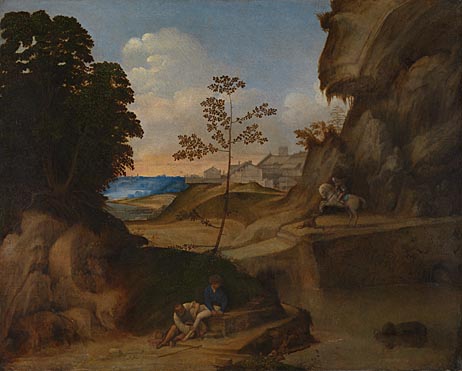
More than optical appearance and painterly fact were at stake, though. As Eastlake acknowledged, there was something effeminate and even cowardly in the endless equivocations allowed by the Venetian technique that stood in firm contrast to the "neck or nothing, irrevocable Flemish method [which] is a far more manly and difficult practice." (Eastlake, Vol. II: 274) Indeed, what emerges from Eastlake's account—particularly as he turns to Venetian masters like Giorgione whose Il Tramonto (ca. 1506-10) we see at left—is an emphasis on dynamic tension between a rocky, masculine art of underpainting in vivifying resistance to the oily, lapping, feminine seas floating on top of it. Giorgione, Eastlake writes:

... would at the same time see the danger of the extreme softness and obliteration of form to be apprehended from this treatment, and therefore the necessity of a proportionate boldness and solidity as its basis. Without the substance and ruggedness of the rock, the superadded cloud, still more softened by glazing, would have wanted contrast of texture and truth of imitation. While therefore adopting contrivances which insured the softest transitions, the most perfect roundness, and the largest breadth, it was impossible for a painter of energetic character like Giorgione not to feel that the utmost vigour and apparent contempt of labour were requisite in the earlier stages of a work in order to conceal the delicate operations reserved for its completion. (Eastlake, Vol. II: 279)

Now, Eastlake goes to some truly extreme measures of violence in his language for communicating the requisite tension between layers. The painter must operate by "beating and stabbing" (p. 283), aiming to "kill the cold colour" (p. 284) and to make sure all blue shadows are "neutralized." (p. 285) It is as if only by these extremes of violence that the Venetian method by Eastlake's account could avoid collapsing into an emasculating, liquid softness—an employment, as Michelangelo supposedly claimed, "fit for women and children." (p. 280)

Given the violence of this language, I can't help but think of Jim Elkins's account of painting-as-alchemy, which we read earlier in the term. It seems highly to the point here: "One of the aims of alchemy ... is to make the volatile fixed: to cut the limbs from the lion, or clip the wings from the dragon, or shear the feathers from the phoenix. The alchemists thought of fixation as hobbling, chaining and mutilation." (What Painting Is, 123) While the violence with Eastlake's Venetians is less fixing volatility than keeping it in productive, rigorous motion, the author was surely cognizant of the alchemical operations at work. "So simple a process as this will banish all ideas of the palette [i.e. of the Flemish, "atomic" method]," Eastlake tells us at one point as he invokes alchemy's transmutational aims: "Evident as the brush-work may be, and ought to be, [it] will transform the mere paint into silver and gold." (p. 285-6)

So, masculine and feminine, under-structure and surface, heat and cold, etc. must all be kept in dynamic tension if the Venetian scheme is to work. But, when it does work, the effect is truly marvelous. And the following are the terms by which Eastlake concludes his study:

The production of various degrees of transparency and of the whole range of warm and cool tints by judicious alternations of scumbling and glazing, is a world which may be said to be at the painter's [end p. 295] command. The art of producing such results may be studied at first merely as an art, and without direct reference to nature. The processes in fact are in a degree precisely those of nature, and therefore can never fail to open up a universe of colour unapproachable by any other means. It need not there be dissembled that the dynamic method considered with reference to colour only, involves completeness in itself, and is so far independent of nature as it is an application of nature's own means. But the power and the capabilities of the system being felt, its possible refinements, with all its accidents, and all its assistance from vehicles and from substance—such as the repeated interposition of colourless media (for which the Italian varnish is adapted) and the production of internal sparkle by brilliant colours half ground, or even by the veiled glitter of metallic particles—all these capabilities being felt, with many more aids from that "cunning" which he has acquired at home, the painter goes to Nature and compares her world with his own. He finds that infinite as the Great Artist is, he too has in his possession a miniature scale of processes which, in conjuring up of magical effects, is analogous to those which Nature herself puts into requisition, and he at once selects and delights in the most difficult of those problems in light and colour which the external world presents to him. (p. 295-6)

As I read this passage, Eastlake's Nature overlaps substantially with that which had brought photography into existence according to Batchen. That is, Venetian painting is a dynamic method that creates its values—indeed, its "magic"—through a quasi-alchemical juxtaposition of male and female, dry and liquid, subterranean and superficial elements brought into dynamic tension. Although the Venetian artist can get lost in that world of his artificial making, it turns out that he is already in the world because Nature and her processes are structured like his dynamic painting method. Now, if we recall that Eastlake was centrally involved with both painting and photography ca. 1850—he became President of the Photographic Society in 1853 and the first Director of London's National Gallery in 1855—some interesting questions emerge. Is it too simplistic to say that where the painter's "cunning" had to be used to craft juxtaposition between elements to create a dynamism equivalent to nature, the photographer's intelligence aimed to bring nature's flux to a halt? If Venetian painting had long been likened to Nature, is Eastlake's emphasis on dynamism new to both (as Batchen would have us believe at least for the latter)? And what are we to make of all this talk of alchemy, cunning and magic? Fascinating!


Wednesday, October 26, 2011

A Story from the Archives

Back when my friend Old Ken Digby was writing his blog, he had an occasional feature. There, he would tell stories based on his findings in archives. Funny places, archives. Filled with strange people and stranger objects from the past. Well, here's a tale that may interest you along those lines and it's one that comes from the National Gallery of Scotland in Edinburgh.

In the third week of June 1926, a furor broke in London as the third Aga Khan offered Sir John Rutherford £100,000 for a racehorse named Solario. Sir John's answer? No dice! Meanwhile, in the fashionable West End auction house of Agnew and Sons, a picture by Joshua Reynolds of Lady Frances Scott was turning heads. After catching a glimpse of Lady Frances, so one breathy review put it, “I had eyes for little else.” This reviewer simply could not contain himself, likening the sitter to another of Reynolds's smoldering subjects, Kitty Fisher. “She herself," so we learn, "was not completely without venality, since she acquired and spent 12,000 pounds in one particular year. She was said by a contemporary writer to have died ‘a victim of cosmetic.’” How, how!

Now, as hot air rises, all of this frantic excitement was making waves up in Scotland. In fact, James L. Caw of the National Gallery of Scotland was very interested in snatching this much-ballyhooed picture from the London touts and installing it in his museum's collection. But, naturally, he wanted to know more about it. Who could he trust in the cut-throat art market where duplicitous double dealing was the name of the game? Apparently with the picture on loan from Agnew and Sons, Caw penned a letter to his pal James Milner, Director of the National Portrait Gallery in London. Then, he received the following letter, dated June 22nd, 1926:

Dear Mr. Caw:

I enclose a copy of all the entries in Graves & Cronin [that is, A History of the Works of Sir Joshua Reynolds, P.R.A., ed. A. Graves and W.V. Cronin (London, 1899)] concerning Lady Frances Scott.

 Mr. Milner is laid up in bed. He had been sitting up until the early hours of the morning over his work, and travelling a good deal, and he broke down a week ago on his return from a busy tour. His doctor will not allow him to leave his house for another week.

When I saw him last night I told him of your letter and he suggested that, if it is necessary to get other opinions, you might send a photograph of the painting to any one or all of the following (1) the Director of the National Gallery (2) the Editor of the Burlington Magazine (3) himself. He does not know of any better authorities on Reynolds. If the heavy cost of a personal inspection by an ‘expert’ is to be borne, he believes No. 2 would undertake it. He presumes the picture is in Edinburgh.

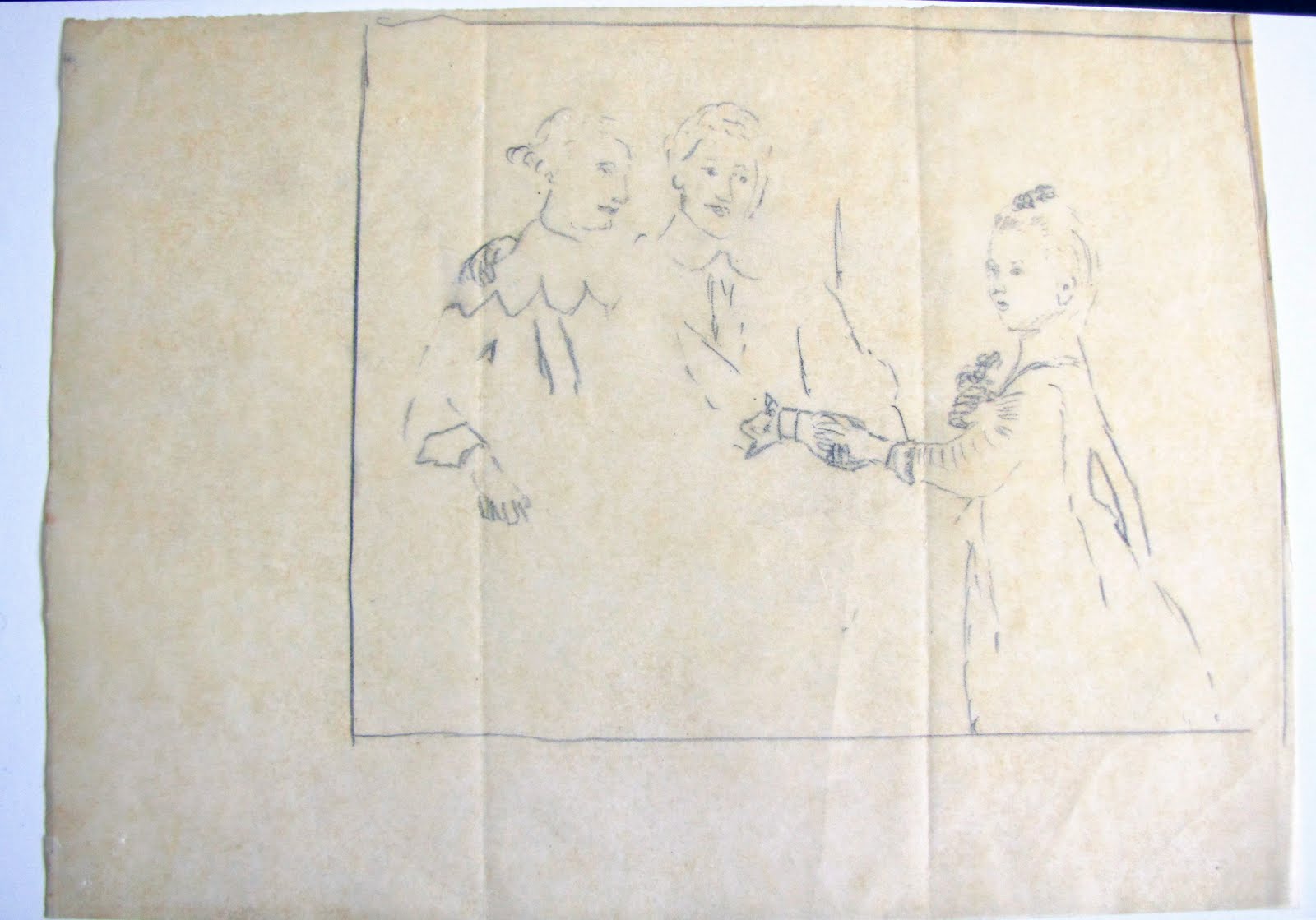
We have a photograph of the group at Blair Drummond. I enclose a slight and harried tracing to indicate the position of Lady Frances.

Yours sincerely,

C. Kingsley Adams

***

As you will have guessed by now, the picture posted above is a photograph (made in Scotland) of that tracing (made in London), itself made from a photograph (probably made in Scotland) of a painting then in Scotland, but originally made in London. What was the point of sending this "slight and harried" tracing from London back to Scotland at the behest of the bed-ridden gallery director and self-proclaimed Reynolds expert? Was it supposed to assist in identifying the sitter? Legitimating the provenance of the picture? Simply adding luster of association to a potential purchase? Whatever is the reason, I thought you'd enjoy this story.

Love,


Sanford Sanchez

Thursday, July 14, 2011

... in which we remember why Sanford Sanchez is not an artist

Many moons ago, yours truly -- Sanford Sanchez -- was an aspiring artist. Art school, beret, black clothing: the whole deal. Without exaggerating the merits of my art, making the work was extremely satisfying. But, how to make a living doing it? This was a bit tricksy. As you know, I moved to New York right after finishing undergrad where I had that ridiculously low-paid internship. Many of my art-school friends were there, but what they were doing as "art" was not exactly up my street. So, although I found myself at a bit of an impasse then and took a different route, I've often tried to find ways to keep on making things if only for my personal amusement.

Now, one such project along these lines is called "Flatpack Friends" in which I make friends, literally, out of cardboard and mail them off to humanoid friends, often at some lonely outpost in the back of beyond. So, driving home the other day, I happened to see a stack of these cardboard boxes. What to do with them, though?
One of my more humble creations of late has been this "scare owl," which would theoretically keep the raccoons and squirrels out of the vegetable patch. Totally ineffective, and also increasingly sad is this owl now that he has been repeatedly "softened" by the sprinkler system. Anyway, seeing the boxes and looking at the owl made me think about feathers. It would be cool, I thought, to make something vaguely to do with feathers.

So, while I had started to fumble around with ink drawings of bird wings—the pictorial model I had in mind being the wings of Caravaggio's Amor Victorious—I quickly reconsidered. I wasn't aiming to produce a beautiful drawing of feathers; what I wanted was a cool cardboard object. Within seconds, I had found an awesome image online of magnified feathers, which I then tweaked, flipped and combined in Photoshop.


Then, around 11 PM (Point #1 toward my title) I ran over to campus where I taped the cardboard box to the wall, hooked the computer to the beamer and traced the design onto the box with a marker. That took about two hours last night. Good fun!
I had a hard time sleeping last night, in part because I was so eager to keep working on this project. (Point #2 toward my title). So, first thing this morning, I took the delineated box out back and started painting in the background in black. All of that looked pretty cool. The palette of black on tan, however, was a little too close to "the day job." And I had been planning to use three colors anyway—well, two colors of pigment plus the tone of the untouched cardboard.
However, once I had watered down this acrylic burnt sienna to the liquidy texture I was looking for, it became this insanely orange hue. Hmm. That was not exactly the palette I had had in mind. And the more I painted in the mid-range, veinous patterning of magnified feather-fibers, the more I had associations with tiger-stripes, psychedelia, etc. Blech.

The only way I could think to save this—note the missionary fervor (Point #3 toward title!)—was by complicating the excessively simplified figure/ground relationship operative to that point. It just wasn't interesting visually to have these thick, uninterrupted cordons of bare cardboard with black and burnt sienna demurely cowering in their circumscribed quarters.

So, this meant inventing some centralizing light source that would bind the image as a whole (even though composed of the same image mirrored horizontally) and then using the orange as a fictive "shadow" on the underside of these feather fronds. (Curiously enough, this also reminded me of a strange painting I had done back in the day). Because I was spinning the box around on the table on our back porch, it created all kinds of cool drips and so on. But, I was also getting low on paint, the flies were coming out and, back to the title of this post, I was becoming incredibly obsessed and massively frustrated that I just! couldn't! get! it! right! with this project. An admittedly frivolous project, mind you, on a worthless piece of cardboard box that I'll mail to a friend to use as his leaving trunk!

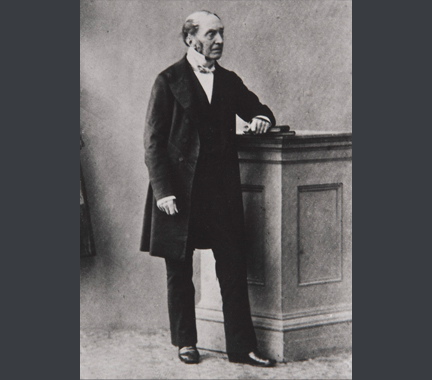
So, an episode like this may serve to remind us why Sanford Sanchez is not who he used to be. Not that there was anything wrong with that young artist at left. But, the lack of sleep; the obsessive, unrelenting fixation on very specific visual problems; the absolute commitment to those problems and the exclusion of most other things ... well, those may be good solutions for other people, but this Sanchez needs to live by a different code. I'll tell you what.